
Recession Across the Upper Teeth, Treated with a Tunnel Graft Using Donor Tissue
Recession across several upper teeth, treated in a single visit with a tunnel graft and processed donor tissue so no tissue had to be taken from the palate. Photographed at two weeks, when the sutures came out.

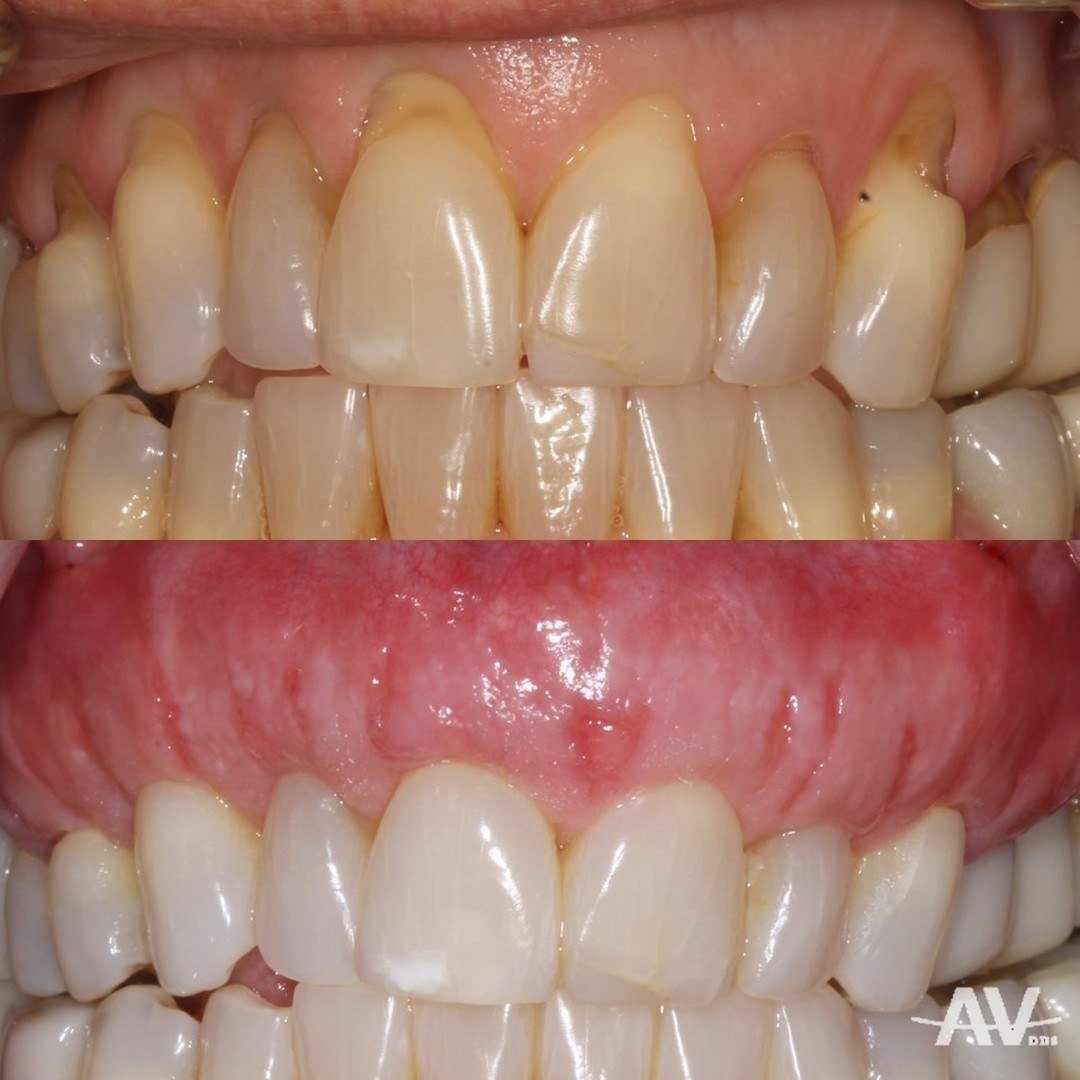


What the Patient Noticed
The gumline had receded on several upper teeth at once, exposing root surfaces that were sensitive and looked darker than the enamel. When many teeth are involved, treating them one at a time with palate tissue would mean several surgeries and several donor sites.
What Was Done
A tunnel graft across the whole area in one visit, using processed human donor tissue (an allograft) instead of tissue from the palate. A pouch was created beneath the gum across the teeth, the donor tissue was placed against the roots, and the gum was moved up over it and sutured. The trade-off is explained on the gum grafting page. On the first half of it, the systematic review Chambrone and Tatakis prepared for the AAP Regeneration Workshop found that connective tissue graft procedures gave the best root coverage outcomes for clinical practice; donor tissue, against that, avoids a second surgical site and lets more teeth be treated in one visit.
The Result
At two weeks the roots are covered and the tissue is thicker across every tooth treated. The tissue continues to heal and mature over the following months. Receding gums explains what causes recession and when to treat it.