
Receding Gums
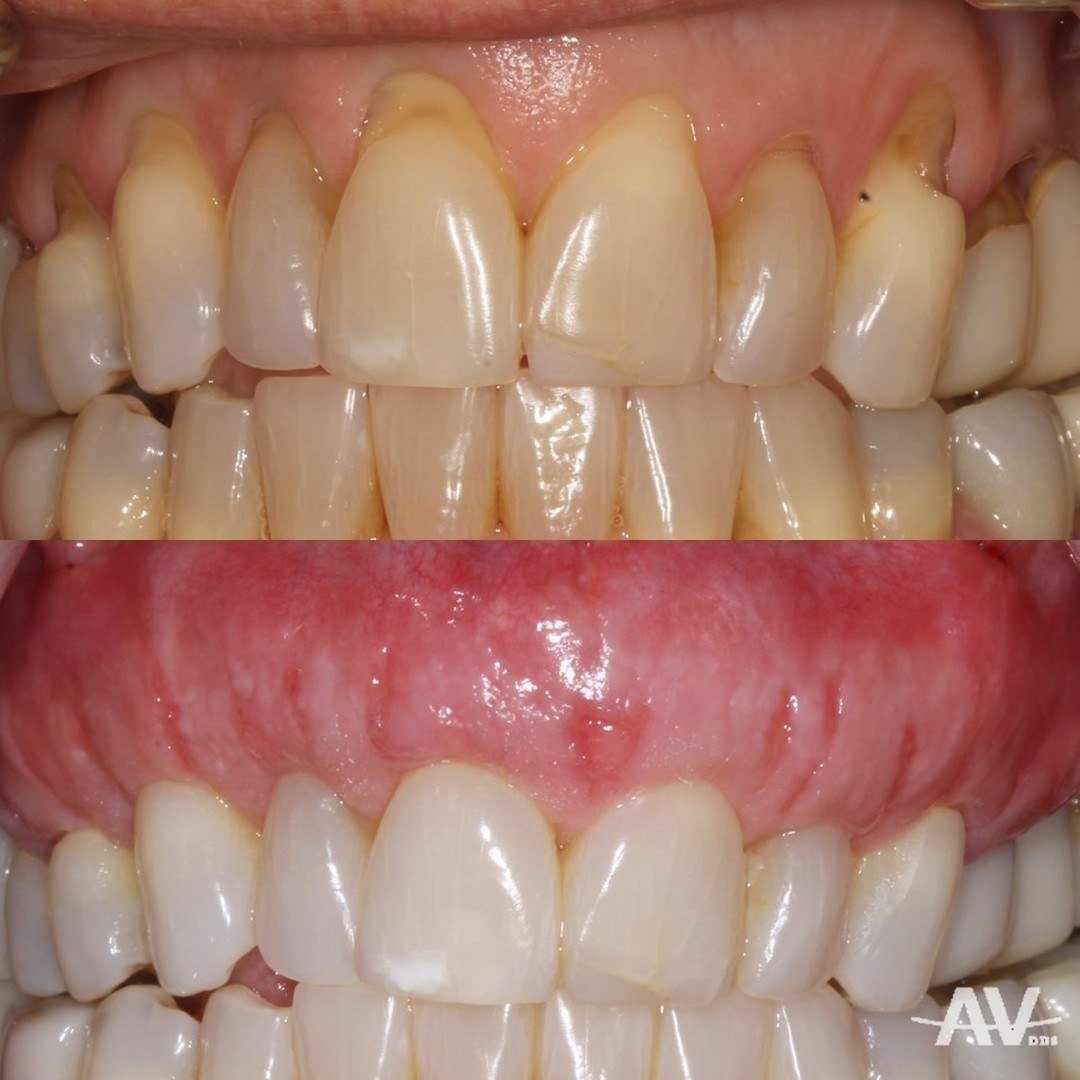
Gum recession is the gum edge moving down the tooth and exposing the root. The root is sensitive, decays easily, and the tooth looks longer. Gum tissue doesn't grow back on its own; a graft covers the root and thickens the tissue, with the goal of stopping further recession.


“For almost 10 years, my dentists had urged me to get a gum graft for my deep gum recession on my lower front teeth. I was avoiding it due to accounts I had heard of its being a very painful process. … I have to say, I wish I had done it sooner and caught the gum recession before it got so bad.”
“Dr. Andrew Verrett did an amazing job with my gum graft procedure. Him and the amazingly supportive staff were very nice in answering questions, making me feel comfortable throughout the whole process, and were super professional. If anyone has fears of stuff like this, I highly recommend coming to this place.”
What It Usually Means
Most recession is mechanical: brushing too hard, or orthodontic movement in thin tissue, sometimes with a frenum pulling on gum that is already thin. Whether a frenum on its own causes recession has not been established. Some is inflammatory: gum disease that has destroyed the bone and let the gum follow. Thin gum tissue, which is inherited, makes all of it more likely. Reviewing the evidence for the 2017 World Workshop, Cortellini and Bissada reported that thin periodontal phenotypes are at greater risk of developing recession, and that inadequate oral hygiene, orthodontic treatment, and cervical restorations can each raise that risk.
On brushing specifically, the systematic review by Heasman and colleagues in the Journal of Clinical Periodontology identified a horizontal or scrubbing technique, bristle hardness, and brushing frequency and duration as the toothbrushing factors most often associated with recession, while concluding that the evidence overall remains inconclusive. That is a fair reason to change a brushing habit and not a reason to panic about it.

Why It Matters
Exposed root is sensitive to cold, sweet, and touch. It is softer than enamel and decays faster. Thin tissue is more likely to keep receding. On front teeth, the longer tooth and the visible gum notch change the smile. Around implants, thin tissue lets the gray of the implant show through. The American Academy of Periodontology states that root coverage procedures are designed to cover exposed roots, reduce further gum recession, and protect vulnerable tooth roots from decay.
When to See a Periodontist
- The root is visible or sensitive.
- A tooth looks longer than its neighbor.
- The gum is a thin, shiny band or you can see the root through it.
- Your dentist noted recession that has changed since the last visit.
Treatment at a Glance
- The consult. Each tooth’s recession is measured, along with the thickness of the gum that is left and the tissue between the teeth, which predicts how much root can be covered. You leave with a written plan and estimate. Nothing is treated that day.
- The procedure. A gum graft: your own tissue from the palate or processed donor tissue, placed over the root and under the existing gum, often through a small tunnel rather than an incision. Forty-five to ninety minutes, numb throughout, sedation if you want it.
- The recovery. Soft food for a week, sutures out at two weeks, settled by six to eight weeks. Gum graft recovery, day by day.
- The result. In a twenty-year follow-up by Pini Prato and colleagues, connective tissue grafts on upper teeth averaged 74 percent root coverage at one year and 68 percent at twenty.
- The cost. Per tooth or per area, in writing before anything is scheduled. The practice is out of network with every plan, files the claim for you, and offers monthly payment plans.
What We’d Do
For the causes in detail and what stops recession, read Receding gums: what causes it and what actually stops it.
Measure the recession and the thickness of the remaining gum, identify the cause, and address it. How much root can be covered depends heavily on what is left between the teeth, not only on the front of them: Cairo and colleagues classified recession by the interproximal attachment level and found that the resulting recession type predicted how much the recession was reduced six months after surgery. Where a root needs covering or the tissue needs thickening, a gum graft with your own tissue or a donor graft. Gum grafting covers the techniques and the recovery.
Recession that is watched and recession that is treated are decided by measuring it, and that is a short appointment. Request a consult in North Austin, or call (512) 346-6097.
How we treat it: Gum Recession and Gum Grafting, or request a consult.
Frequently Asked Questions
Can receding gums grow back?
Not in any meaningful amount. Once the root is exposed, the gum does not regrow over it on its own. Changing the cause slows or stops further recession. A graft is what covers what has already been lost.
Is my toothbrush the cause?
Often part of it. A hard-bristled brush or a scrubbing motion wears the gum, especially on the canines and premolars on the side you brush hardest. An electric brush with a pressure sensor and a soft head is usually a good change.
Do I need a graft, or can I wait?
Mild recession with thick, healthy gum can often be watched. Recession that is progressing, sensitive, close to the bone edge, or in a visible area is treated sooner because a smaller graft heals faster and covers more.
What is the treatment for receding gums?
A gum graft: a thin piece of your own tissue from the palate, or processed donor tissue, placed over the exposed root and under the existing gum. It covers the root and thickens the tissue so it stops receding. One visit of 45 to 90 minutes, numb throughout, with sedation available; soft food for a week and sutures out at two weeks.
How much does gum recession treatment cost?
It depends on how many teeth are treated and which technique fits, and you get the number in writing at the consult before anything is scheduled. We are an out-of-network provider, but we file your insurance claim for you so the reimbursement comes to you directly, and monthly payment plans are available.
How long does the result last?
In a twenty-year study by Pini Prato and colleagues, connective tissue grafts on upper teeth averaged 74 percent root coverage at one year and 68 percent at twenty. Controlling the cause, usually the brushing, protects the result. See the study.